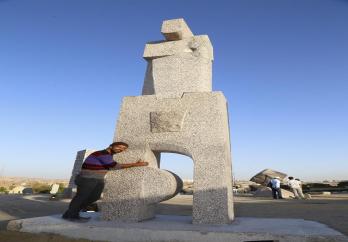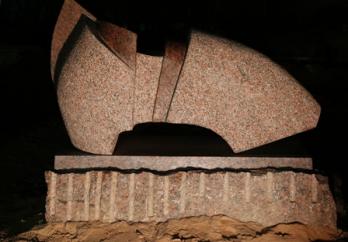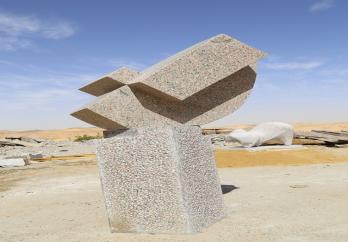
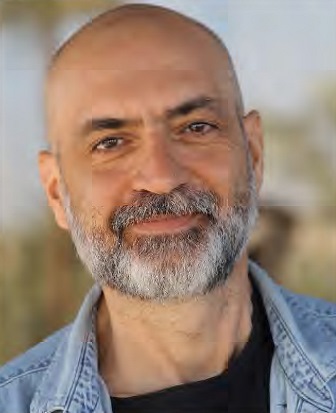
An extended journey in the world of art was begun by the Italian artist Alessio Ranaldi with the study of jewelry design at the Academy of Arts in Rome in 2002, before turning to specialize in the art of sculpture. Over the years, he participated in many international art organizations such as BBK Berlin and the International Sculpture Center in the United States of America, and he also executed artistic works in many places around the world, in experiences that contributed to shaping his sculptural language and strengthening his focus on blending geometry and organic form.
The artist Alessio Ranaldi describes his artistic experience in sculpture as being based on continuous research into the interaction between forms and forces, and the exploration of how two or more elements collide, and what results from this collision in terms of action and reaction, which transforms simple geometric forms into deeper and more fluid compositions.
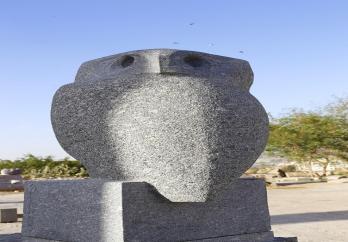
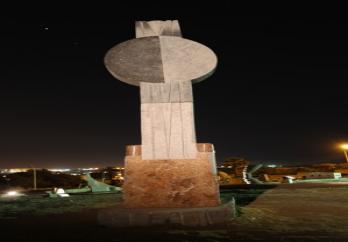
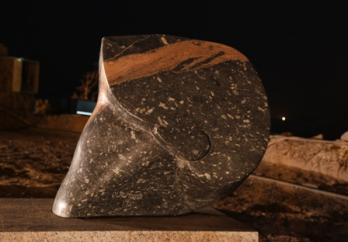
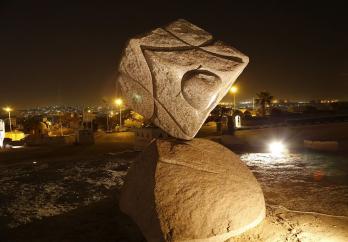
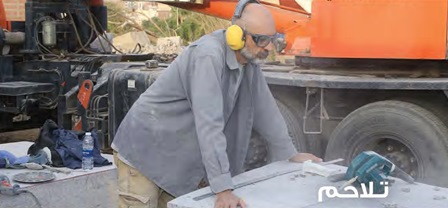
Regarding the work he is executing in his first participation in the Aswan International Symposium for GraniteSculpture, the Italian artist said that it bears the title Unitas, which in the Latin language means "unity." Its philosophy is based on bringing together two vertical geometric elements that merge and meet in a single organic form within a sharp geometric composition, which gradually transforms into a fluid surface that suggests movement, connection, and transformation. He points out that the meeting point of the two elements in the work is not a point of separation, but a space of fusion, expressing the idea of unity emerging from dualities of past and present, masculine and feminine, heritage and innovation.
Alessio Ranaldi confirms that his current work
represents a special station in his art1st1c career, because the creative experience in Aswan is different, as the granite stone from which the ancient Egyptian monuments were built is extracted there, which makes the sculptor feel a deep connection to history and to the material itself. He commented, saying: The Aswan Symposium derives its uniqueness from the fact that it transforms the creative act into a living extension of one of the oldest sculptural traditions in the history of humanity, within a natural scene that is in itself a complete work of art. It is distinguished by allowing artists to work on stone at its original source, in a place historically associated with the making of obelisks and monumental sculptural works. This direct connection to the ancient craft, alongside the dramatic nature of Aswan, grants the symposium a depth and authenticity that cannot be repeated in another city.
 |